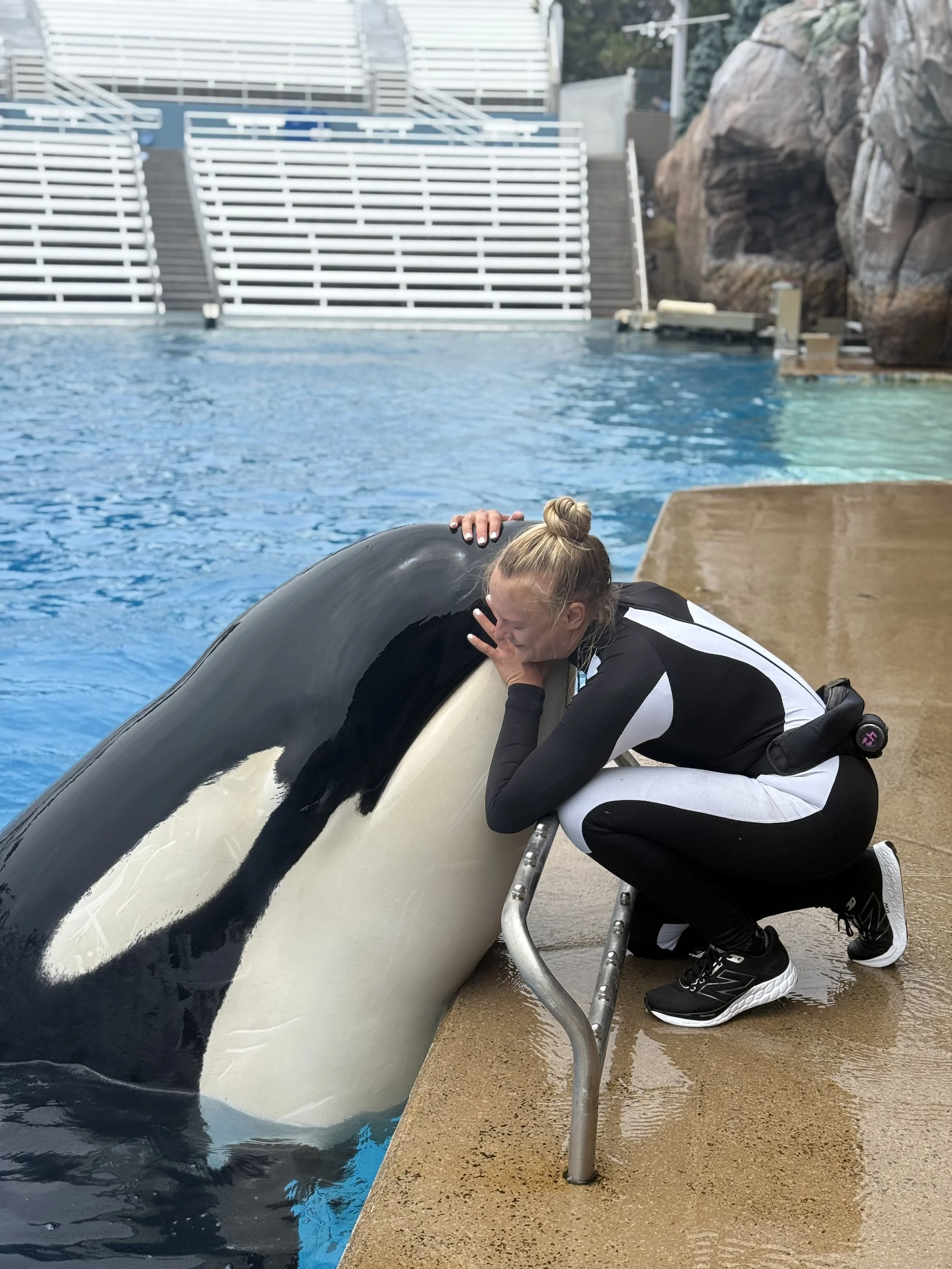
The Reality of Killer Whales in Human Care: Moving Beyond the Noise
There is a staggering amount of negativity surrounding killer whales in a zoological setting. Let’s address the elephant, or rather, the killer whale in the room: I do not support the capture of wild animals without cause. Today, our focus is (and should be) on rescue and rehabilitation.
However, many of the whales currently at SeaWorld were collected decades ago, in an era when “animal rights" wasn't a part of the public consciousness and our understanding of animal sentience was in its infancy.
I have faced significant backlash for my time working with these animals, but here is the reality we must face: They are here now.
Why "Setting Them Free" Isn't the Answer
The dream of releasing these whales into the open ocean is a dangerous one. Having spent years by their side, I can tell you:
Survival Skills: These whales lack the hunting and navigation skills necessary to survive in the wild.
The Sanctuary Challenge: While sea sanctuaries are often proposed as a middle ground, they come with immense risks. Moving these animals is physically stressful, and unlike a controlled marine park environment, sanctuaries expose them to uncontrolled pathogens and pollution.
Logistics & Well-being: The sheer cost and logistical complexity of a move can often outweigh the perceived benefits for the animal’s actual health.
We need to shift our focus and set aside our own projections of what we think is best, like saying 'they belong in the ocean,’ and truly consider what is best for the individual animal, given its unique history.
A Life of Purpose
These animals live rich, stimulated lives. If I had walked into my job at SeaWorld and found depressed, suffering animals, I wouldn’t have spent my early 20s there. Instead, I found a community dedicated to their well-being.
By caring for them, we gain insights that are impossible to gather in the wild. Our research informs laws and conservation practices that protect their wild counterparts. We are learning how to save the species because of the individuals we care for every day.
Shifting the Mindset
I understand the deep desire to “save" these whales. It comes from a place of compassion. But they don't need saving from their current homes; they need our continued commitment to their care.
I urge those with strong feelings on this topic to shift your mindset. Instead of fueled negativity, let’s focus on how we can provide the best possible lives for these animals where they are right now.